About Protestantism
Various aspects of Protestantism, including but not limited to views on salvation, Bible versions, history, and denominations.
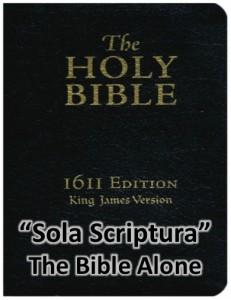
True Christianity seeks to ensure that all Christian teaching (doctrine) and Christian living is in agreement with Scripture (the Bible). The Protestant Reformation came about with this purpose in mind… an attempt – by many Catholic priests, monks and other Catholics – to reform (correct) the Catholic church to be in line with bible teachings. This is where the expression “Sola Scripturea” com from – which is Latin for Scripture Alone. The teachers and preachers who grew of out this “protestant” movement were protesting against many serious religious issues of their time:
- First and foremost: false teachings about salvation
- False teachings about God, Mary, Jesus and man’s own spiritual condition
- Serious abuses of power in the Catholic leadership
- Morally corrupt church leaders
The Westminster Confession Of Faith
The Westminster Confession Of Faith
(1646)
-
Chapter I. Of the holy Scripture
Chapter II. Of God, and of the Holy Trinity
Chapter III. Of God’s Eternal Decree
Chapter IV. Of Creation
Chapter V. Of Providence
Chapter VI. Of the Fall of Man, of Sin, and of the Punishment thereof
Chapter VII. Of God’s Covenant with Man
Chapter VIII. Of Christ the Mediator
Chapter IX. Of Free Will
Chapter X. Of Effectual… Continue reading
An Introduction To The Canons of Dordt
An Introduction To The Canons of Dordt
The Decision of the Synod of Dordt on the Five Main Points of Doctrine in Dispute in the Netherlands is popularly known as the Canons of Dordt. It consists of statements of doctrine adopted by the great Synod of Dordt which met in the city of Dordrecht in 1618-19. Although this was a national synod of the Reformed churches of the Netherlands, it had an international character, since it was composed not… Continue reading
The Five Articles of the Remonstrants
The Five Articles of the Remonstrants
(Arminian Heresy)
These are often referred to as the 5 points of Arminianism, a “free-will” heresy to which the 5 points of Calvinism were written to address.
Article 1.
[Conditional Election – corresponds to the second of TULIP’s five points, Unconditional Election]
That God, by an eternal and unchangeable purpose in Jesus Christ his Son before the foundation of the world, has determined that out of the fallen, sinful race of men,… Continue reading
The Heidelberg Catechism
The Heidelberg Catechism
This is an HTML adaption of the e-text version provided by “The Christian Classics Ethereal Libray” (CCEL). The text version is located at http://www.ccel.org/creeds/heidelberg-cat-ext.txt
Brief History of the Heidelberg Catechism
One of the symbolical books of the Reformed Church. Its name is derived from the city in which it was compiled and first printed. It is also sometimes styled the Palatinate Catechism, from the territory (the Palatinate) of the prince (Frederick III) under… Continue reading
Martin Luther’s 95 Theses (1517)
Disputation of Doctor Martin Luther
on the Power and Efficacy of Indulgences
by Dr. Martin Luther (1517)
Out of love for the truth and the desire to bring it to light, the following propositions will be discussed at Wittenberg, under the presidency of the Reverend Father Martin Luther, Master of Arts and of Sacred Theology, and Lecturer in Ordinary on the same at that place. Wherefore he requests that those who are unable to be present and debate orally… Continue reading





Charity Navigator lists salaries of charitable organization leaders, but it is not a Christian website: